
A damning report by Greece’s National Aviation and Railway Accident Investigation Organization (EODASAAM) has highlighted major failures in the handling of the deadly Tempi train disaster, which occurred on the night of February 28, 2023.
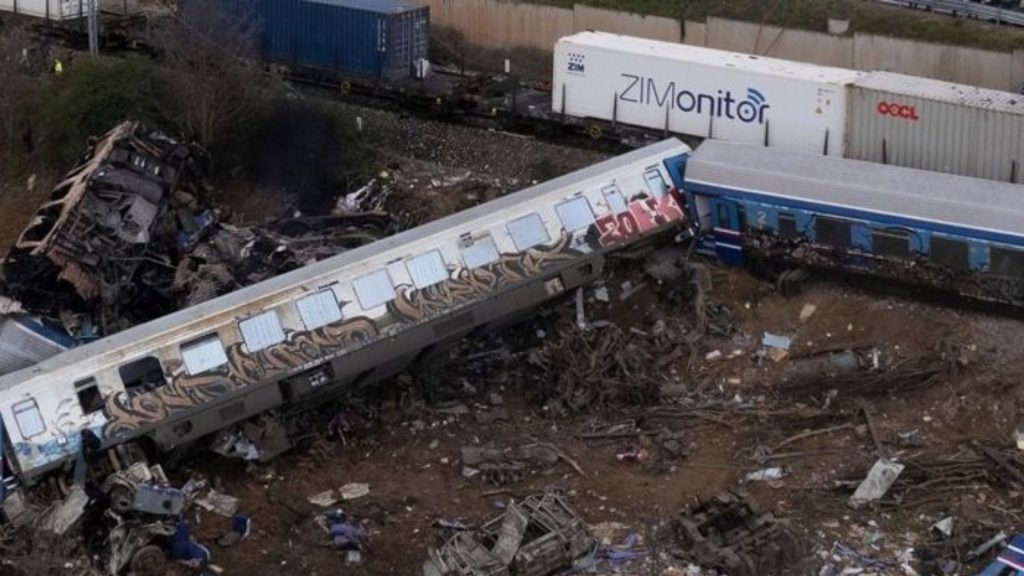
The crash, which killed 57 people and seriously injured 88 others, was worsened by the improper management of the accident site, leading to the loss of critical evidence.
Lost Evidence and Investigation Shortcomings
“What happened – with the evidence being destroyed in three days – must never happen again,” stated lead investigator Kostas Kapetanidis at a press conference unveiling the much-anticipated report.

EODASAAM’s findings expose severe procedural failings, human error, lack of coordination, and outdated railway safety practices.
The report confirms that the accident site was not properly secured, preventing a thorough investigation.
Christos Papadimitriou, head of railway incidents at EODASAAM, acknowledged the critical role of the victims’ families in uncovering evidence, saying, “Everyone owes them an apology.”
Investigators also criticised the decision to remove debris from the crash site to a secondary location, arguing that this hindered efforts to understand the causes of the explosion that followed the collision.
Unanswered questions about the explosion
One of the report’s most concerning revelations is the presence of a possible unidentified substance that may have contributed to the massive fireball following the crash.
“With the existing evidence [it] is impossible to determine what exactly caused it, but simulations and expert reports indicate the possible presence of a hitherto unknown fuel,” the report states.
Traces of xylene and benzene were detected at the site, intensifying speculation about the cargo carried by the freight train.
Root causes of the disaster
The collision was reportedly caused by a sequence of errors, beginning with an undertrained stationmaster at Larissa station mistakenly directing passenger train IC-62 onto the same track as an oncoming freight train.
The report criticises the Greek railway system for failing to ensure the competence of its stationmasters, stating that OSE (Hellenic Railways Organization) “does not guarantee that they are competent in the safety-related tasks for which they are responsible, under all conditions.”
It also highlights that Greek railway safety protocols are outdated compared to international standards and that a lack of investment in railway infrastructure and personnel contributed to the tragedy. The absence of a central coordinating body for post-accident response further exacerbated the situation.
Government and Public Reactions

The release of the 178-page report comes on the eve of mass protests and a general strike marking the second anniversary of the crash. Public outrage has grown over the slow progress of a separate judicial inquiry into the disaster.
Mr Papadimitriou stressed that necessary safety upgrades remain incomplete, stating, “An accident doesn’t occur by chance. There are accumulating factors that contribute to the accident, because humans also tend to make mistakes.”
The Greek government has pledged to address the identified safety shortcomings, but has denied accusations of interfering with the investigation. Government spokesman Pavlos Marinakis dismissed claims of a cover-up, insisting that no such allegation was substantiated in the report.
Meanwhile, thousands are expected to take to the streets of Athens and other cities in protests demanding justice for the victims and reforms to prevent another disaster of this scale.
You can read the full report, in English, here.
