
Lykourgos Logothetis was one of the most important Greek leaders of the first half of the 19th century. He distinguished himself as the political and military leader of Samos during the Revolution of 1821.
Lykourgos Logothetis was born on February 10, 1772 in Karlovasi as George Paplomatas. When he was 16 he settled in Constantinople, where he was taught philosophy and appointed secretary of the Ecumenical Patriarchate.
In 1795 he moved to Bucharest to become secretary to the ruler of Moldavia, Constantine Ypsilantis, and then to the ruler of Wallachia, Alexandros Soutsos. He was promoted to logothete (an role similar to that of a minister) and henceforth used this title as a surname instead of Paplomatas.
Logothetis had well known acquaintances and, when in 1805 the popular faction of the ‘Carmanioli’ temporarily prevailed in Samos, he was invited to take over the administration of the island.
The strong reaction of the ‘Kallikantzaros’, who represented the ruling class of Samos, forced him to return to Constantinople, where he was eventually exiled to Mt Athos. The proud Samian returned to the island multiple times but was constantly driven out by the Kallikantzaros.
Shortly before the beginning of the Revolution of 1821, he was appointed by Alexandros Ypsilantis as leader of the revolutionary forces of Samos. He immediately took command and devoted himself to the political and military organisation of the rebel Samians. His first concern was his reconciliation with the Kallikantzaros, as a result of which his power was not questioned throughout the struggle. On May 8 the Revolution was officially proclaimed on the island and Lykourgos Logothetis was proclaimed General of Samos.
Logothetis led one of the greatest military defences against the Ottomans on Samos. After his victory, patriots from Chios persuaded him to launch a campaign on the island.
Logothetis landed in Chios with 2,500 armed Samians on March 10, 1822. He immediately replaced the local authorities with his own people and tried to organise the fight on the island. However, a strong reaction from the Protestants of Chios hindered his preparation. When a strong Turkish fleet and army arrived on the island, the island was destroyed and the inhabitants were slaughtered or sold as slaves.
Lycurgus Logothetis was considered responsible for the destruction of Chios and the interim government summoned him to Nafplio for an apology and imprisoned him. After a few months, he was released due to the intervention of Kolokotronis and Nikitaras.
He returned to Samos to take over the duties of commander again. He organised the islands defences, ready to repel the new efforts of the Turks to invade the island.
An Ottoman fleet under Hosref Pasha appeared arrived on Samos. Lykourgos Logothetis convinced his compatriots that the only way out was to stay and fight to the end. His speech inspired the Samians, who fortified the island effectively. When Khosref tried to land, he met a decisive reaction and was forced to leave.
Every year since then, he was elected governor of Samos.
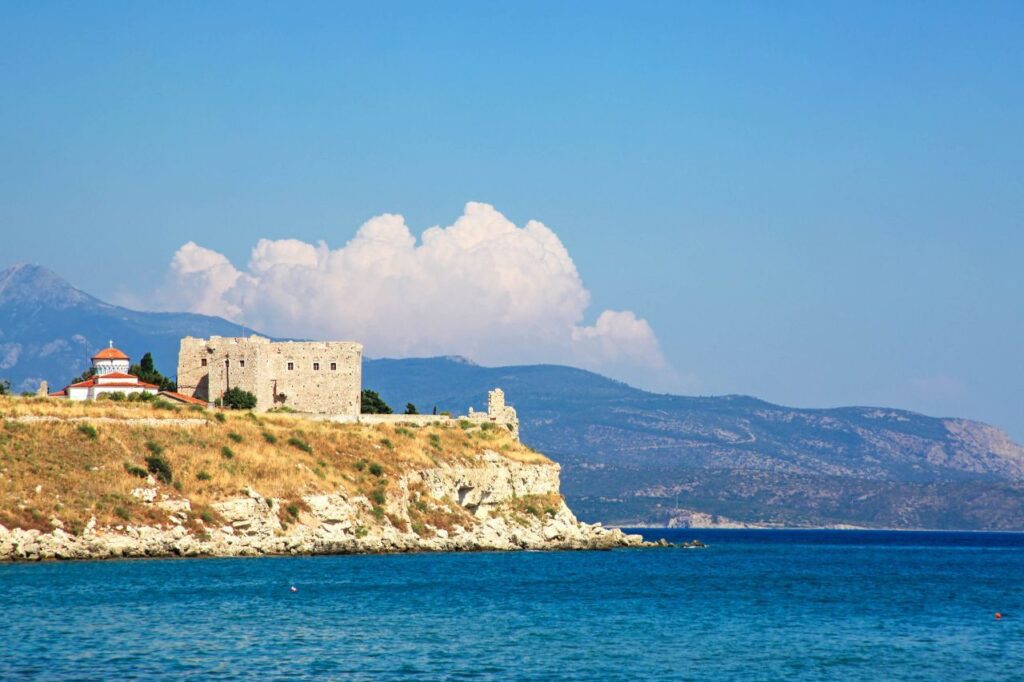
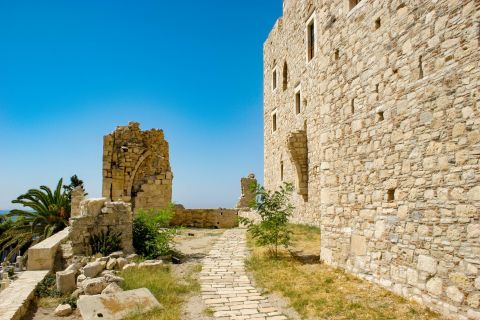
The castle where he planned his defence strategies was henceforth named the ‘Castle of Lykourgos Logothetis’.
During the reign of Otto in 1836, he received the rank of colonel in the Royal Phalanx. In 1843, he represented Samos as a plenipotentiary in the National Assembly that emerged from the Revolution of September 3 and passed the first Constitution after independence (Constitution of 1844).
Lykourgos Logothetis died on May 22, 1850 in Athens, at the age of 78, “from ossification of the heart valves”, according to his death certificate.
Sourced By: San Simera
